PULP, history as a warm wet place (2018-19)
by and with Carolina Mendonça, Catalina Insignares, Ida Daniel, Rodrigo Andreolli and Zuzana Zabkova
This was the second multilayered research that Carolina invited me to undergo with her. She was fascinated with the weight of bodies and how their materiality changes through the change of the imaginaries that they carry. It was a beautiful and deeply moving process that kept us all engaged with speculative histories, poetic relations and weird presence.
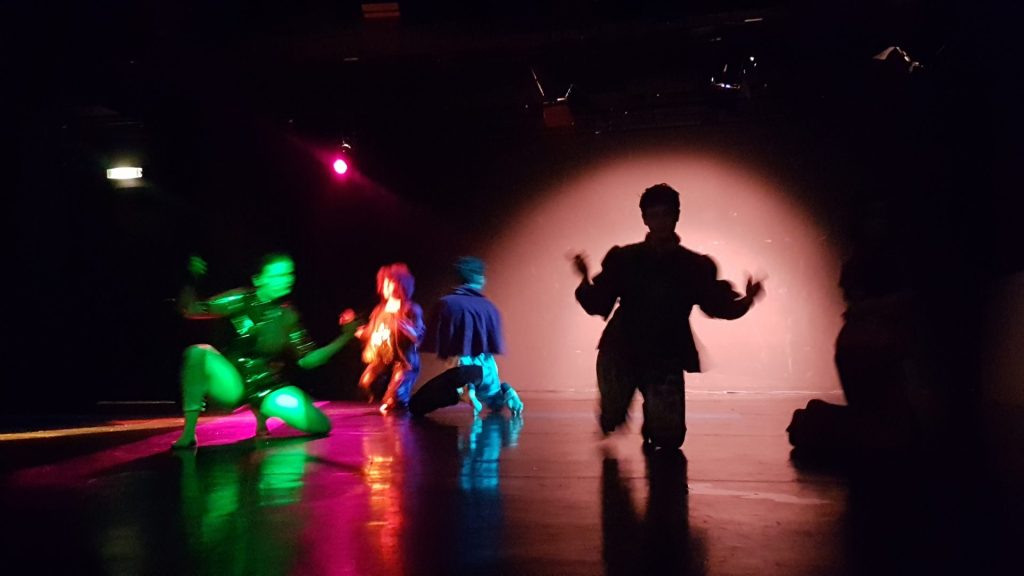
“We asked ourselves how wetness and stickiness could be a way of tracing the sliding of time. We started to build an intuitive archeology digesting the leftovers of the XVII-XVIII centuries in disrupted references. A soft, wet, shapeless mass of material that allowed our bodies to be unsynchronized. Hands became older than the rest of the body and we had to learn how to use them. Five bodies monstrously transforming, supporting each other with slippery and sticky hands.
Carolina Mendonça, Catalina Insignares, Ida Daniel, Rodrigo Andreolli and Zuzana Zabkova are working once more in one of the different configurations in which they collaborate, expanding the notion of choreography and the body as a site of knowledge production, in particular those devalued by Western epistemologies.“
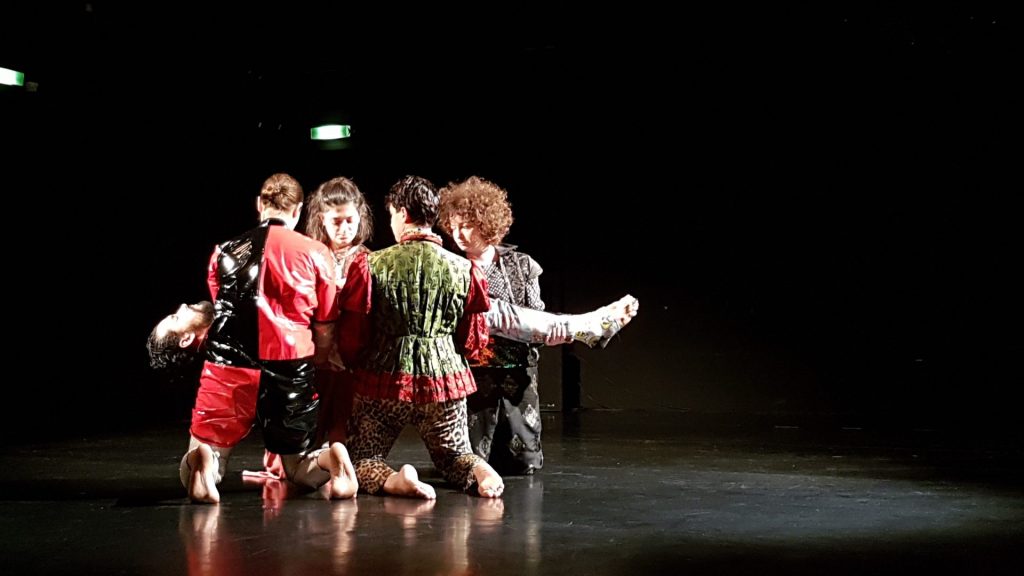
“Weitaus formbewusster präsentierte sich später an diesem Abend die gemeinsam mit einem fünfköpfigen Ensemble entwickelte Tanzperformance „Pulp – History As a Warm Wet Place“ von Carolina Mendonça, hervorgegangen aus einem Studienprojekt am Institut für Angewandte Theaterwissenschaft in Gießen. Am Anfang liegen alle fünf Performer, gekleidet in bizarre Kostüme zwischen Couture und Vergangenheit, am Boden; wie in einem Ritual heben vier von ihnen gemeinsam den fünften hoch und legen ihn nach einer Weile wieder ab. Solange, bis jeder mal an der Reihe gewesen ist.
Später kommt es zu immens variationsreichen Aktionen mit den Händen. Irgendwann kommt ein klebriger Schleim ins Spiel der sich nun eng umeinander wälzenden Körper. Das Geschehen wirkt kryptisch, die Stichworte im Programmheft lauten: „eine intuitive Archäologie (…), die Überreste und Referenzfetzen des 17. und 18. Jahrhunderts verdaut“. Jedenfalls ist dieses über weite Strecken stille Stück von einer unerhörten Dichte und Intensität.” von Stefan Michalzik
 Ida Daniel